November 2026 Update: What Changed
Meta has updated its link policy for Facebook Pages. Here is a summary of the key changes confirmed as of November 2026.
- Combined monthly allowance: Pages included in the rollout are limited to 2 links per month across posts, reels, and comments combined. Comments are no longer exempt.
- One comment exception: Additional links added in the comments of your own post that already contains a link do not count toward the limit.
- What is not counted: Links to Meta technologies (Facebook, Instagram, Threads, WhatsApp), Facebook affiliate partner links, and links in paid ads.
- Reset schedule: Accounts without a subscription reset on the 1st of each month. Meta One subscribers reset on their renewal date. Unused allowance does not roll over.
- Gradual rollout: The limit does not apply to all Pages. News publisher Pages are reportedly exempt (Press Gazette), though Meta has not publicly confirmed how it defines them.
| Plan | Monthly price | Facebook posts or comments with links | Instagram posts with links | Instagram reels with links |
|---|---|---|---|---|
| No subscription | US$0 | 2 | 0 | 0 |
| Essential | from US$14.99/mo | 2 | 0 | 0 |
| Advanced | from US$49.99/mo | 8 | 4 | 4 |
| Expert | from US$149/mo | 20 | 8 | 8 |
| Max | from US$499/mo | Unlimited | 12 | 12 |
Prices vary by region and should be checked on Meta's plan page.
For Instagram, clickable links in posts and reels begin at the Advanced tier -- Essential includes none. Post and reel allowances are counted separately from each other.
Links sent via Messenger or DMs are not counted under Meta's published rules at the time of writing, and this may change.
Sources: Meta Help Center, Meta One plans, Press Gazette
The End of Free Organic Traffic and the Rise of Pay-to-Play
The digital landscape is experiencing a seismic structural shift as Meta aggressively closes the loop on outbound organic traffic. For over a decade, growth marketers, media publishers, and e-commerce founders relied on Facebook as a primary distribution channel, freely routing massive audiences to external landing pages, storefronts, and independent media properties. That era of unrestricted digital arbitrage has abruptly concluded. The introduction of strict algorithmic and systemic limitations on external hyperlinks represents a fundamental pivot in social media economics, forcing businesses to rethink their entire customer acquisition architecture. Meta is no longer satisfied with merely reducing the algorithmic reach of posts containing external links; the platform is now implementing hard systemic caps, transforming the network from an open highway into a heavily tolled, gated ecosystem.
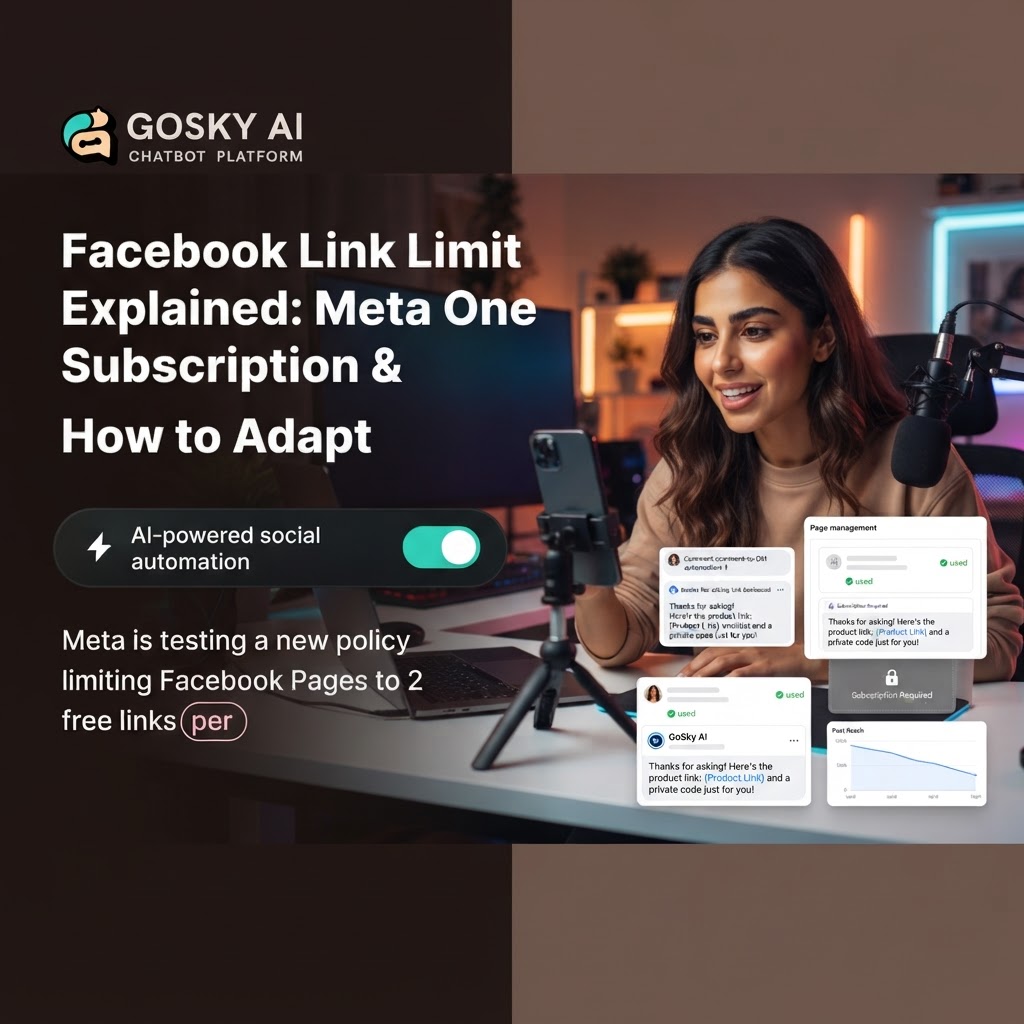
The recent algorithm update, widely known as the new "pay-to-post-links / subscribe to Meta One" system that Meta is testing on Facebook Pages, restricts unpaid business pages to two external links per month. Exceeding this limit requires a paid Meta One subscription, fundamentally shifting Facebook from an organic traffic engine to a gated, pay-to-play ecosystem.
This operational reality is stark for brands that have built their revenue models on social media traffic generation. According to recent industry observations, this limitation is currently in a rigorous A/B testing phase, targeting professional accounts and business pages. The mechanics of this restriction are designed to enforce absolute scarcity. The two-link allowance resets strictly on the first day of every month, and any unused capacity simply vanishes; there is no rollover mechanism to bank links for future campaigns. This forces marketers into a corner where every single outbound click must be meticulously calculated for maximum return on investment, or businesses must capitulate and integrate Meta's new Software-as-a-Service subscription fees into their monthly operational overhead.
Strategic Frameworks to Bypass the Organic Link Penalty
Understanding the exact parameters of Meta's new monetization strategy is the first step in engineering a bypass protocol. Meta has introduced a tiered subscription model under the Meta One umbrella, designed specifically to monetize the very act of audience redirection. The Essential plan starts from US$14.99 per month but does not increase the Facebook link allowance beyond the default 2. The Advanced plan starts from US$49.99 per month and elevates the monthly cap to 8 external links. The Expert plan starts from US$149 per month to unlock 20 links. The Max tier starts from US$499 per month and offers unlimited link sharing. Prices vary by region and should be checked on Meta's plan page. This aggressive pricing architecture clearly signals Meta's intention to extract direct revenue from businesses that use their platform for lead generation and off-site sales, as noted in reports detailing how Facebook is testing a link-posting limit for professional accounts and pages.
However, the most critical intelligence lies not in the restrictions, but in the algorithmic exemptions. Meta has deliberately carved out specific use cases that do not count toward the monthly two-link quota. Note that links in comments now count toward the same shared monthly allowance as post links -- the comment section is no longer an exempt workaround. One exception: additional links you add in the comments of your own post that already contains a link do not count. URLs directing users to other properties within the Meta ecosystem -- such as Instagram, WhatsApp, or Threads -- are exempt from the penalty. Official Facebook affiliate partner links and links embedded within paid Meta Ads also do not count. This exemption architecture reveals Meta's dual mandate: maximize user retention within their walled garden while simultaneously driving businesses toward paid advertising and premium subscriptions.
To navigate this hostile environment, growth architects must deploy the Comment-to-DM Migration Strategy. Because comment links now count toward the same monthly quota as post links, simply dropping a link in the comments is no longer a workaround. The strategic imperative is to utilize automated conversational triggers instead. By instructing the audience to comment a specific keyword on the post, businesses can deploy automated systems to instantly deliver the external link directly into the user's Direct Messages -- keeping the public auto-reply free of external URLs. This methodology signals high engagement to the Facebook algorithm, boosting the post's organic reach through rapid comment velocity, while the link is delivered privately.
Another highly effective methodology is the Ecosystem Routing Protocol. Because Meta does not penalize links that keep users within its proprietary network, marketers can construct multi-step funnels that leverage platforms like Threads or Instagram as intermediary landing pages. A Facebook post can direct users to a highly engaging Threads discussion without consuming a monthly link credit. Once the user transitions to Threads, the environment is currently less restrictive regarding outbound links, allowing the brand to capture the click without paying the Meta One toll. This cross-pollination strategy not only preserves the Facebook link quota but also builds audience density across multiple Meta properties, hedging against future platform-specific restrictions.
Furthermore, brands must adopt a Zero-Click Content Architecture. The traditional model of using social media merely as a billboard to drive traffic to a blog or website is obsolete. Content must now be engineered to deliver complete, standalone value directly within the Facebook feed. By providing comprehensive insights, micro-case studies, and deep analytical thoughts natively, brands build immense trust and authority. The conversion mechanism is then shifted entirely to the backend, utilizing the aforementioned Comment-to-DM automation to capture high-intent leads who have already consumed the native value and are actively requesting the next step in the funnel.
| Meta One Subscription Tier | Monthly Cost (USD) | External Link Limit | Strategic Viability & ROI Assessment |
|---|---|---|---|
| Free (Default Page Status) | US$0.00 | 2 Links / Month (posts, reels, and comments combined) | Highly restrictive. Requires immediate pivot to Comment-to-DM automation and Zero-Click content strategies to maintain traffic flow. |
| Advanced Plan | from US$49.99/mo | 8 Links / Month | Better suited for micro-creators with extremely high-ticket conversions who need a modest increase in link capacity. |
| Expert Plan | from US$149/mo | 20 Links / Month | Mathematically inefficient for scale. The capital is better deployed directly into Meta Ads to guarantee targeted reach rather than buying organic link capacity. |
| Max Plan | from US$499/mo | Unlimited Links | Only viable for massive media publishers or enterprise e-commerce brands where organic link volume directly correlates to thousands of daily transactions. |
| The Automation Bypass | $12.00 (GoSky AI) | Unlimited (via DM) | Maximum ROI. Bypasses the feed limitation entirely, builds an owned subscriber list in the DM inbox, and scales infinitely without cost increases. |
Analyzing this structured data reveals a glaring inefficiency in Meta's proposed solution. Paying up to US$149 per month merely to post twenty links organically is a fundamentally flawed capital allocation strategy. Organic reach on Facebook is already heavily suppressed; paying a premium simply for the privilege of posting a link does not guarantee that the algorithm will actually distribute that link to the audience. As industry experts have pointed out regarding how A Facebook test makes link-sharing a paid feature for creators, the most mathematically sound approach for many businesses is to reject the Meta One subscription entirely. Instead, growth teams must redirect that capital toward robust automation infrastructure that uses the Comment-to-DM approach -- delivering links privately via DM rather than in the public feed -- thereby building a proprietary database of engaged users within the messaging inbox.
Automating Profitability with GoSky AI's Flat-Rate Architecture
The transition toward automated Comment-to-DM workflows is no longer an optional growth hack; it is a mandatory survival mechanism. However, the software ecosystem providing these automation tools is fraught with predatory pricing models that actively punish business growth. This phenomenon is known as the "Success Tax," a structural flaw inherent in legacy automation platforms like ManyChat. These platforms lure users in with seemingly accessible entry-level pricing, often around $15 per month. Yet, their billing architecture is tied directly to the number of contacts or subscribers a business acquires. As a creator successfully executes viral campaigns and captures thousands of leads in their DMs, their monthly software costs scale exponentially. A successful campaign that brings in ten thousand new contacts can suddenly inflate the monthly automation bill to hundreds of dollars, severely eroding profit margins and penalizing the very growth the software was supposed to facilitate.
GoSky AI fundamentally dismantles this predatory model through its revolutionary flat-rate architecture. Positioned as the ultimate Creator Commerce Infrastructure, GoSky AI offers a comprehensive suite of social funnel automation tools for a flat $12 per month, granting users unlimited contacts. This pricing paradigm shifts the economic advantage entirely back to the creator. Whether a brand captures one hundred leads or one hundred thousand leads through their automated funnels, the operational overhead remains strictly fixed at $12. This allows businesses to scale their audience acquisition infinitely without the looming threat of exponential software costs, ensuring that every new lead generated directly increases the bottom-line profitability rather than triggering a higher billing tier.
The strategic implementation of this technology directly neutralizes Meta's new restrictions. By using GoSky AI's Facebook comment auto-reply to deliver links via direct message, businesses keep external URLs out of the public feed, preserving their monthly allowance. When a brand publishes a highly engaging, zero-click post and prompts the audience to comment a specific keyword like "GUIDE" or "LINK," GoSky AI instantly detects the trigger. The platform automatically replies to the public comment -- without including an external link in that reply -- and simultaneously dispatches a personalized Direct Message containing the external URL. Links sent via Messenger and DMs are not counted under Meta's published rules at the time of writing, and this may change. This transforms the restrictive public feed into a massive top-of-funnel awareness engine, while the actual conversion and link distribution occur privately.
Furthermore, GoSky AI eliminates the friction of adoption that plagues legacy systems. While competitors force users into restrictive 14-day trials that require upfront credit card commitments and immediate auto-billing, GoSky AI champions a risk-free, speed-to-value onboarding philosophy. Creators can establish their account, connect their Meta properties, and deploy their first automated workflow in under five minutes. The platform offers a full-featured trial that includes auto-replies for up to 100 contacts with absolutely no credit card required. This allows growth teams to immediately test the Comment-to-DM bypass strategy, prove the return on investment, and witness the algorithmic boost firsthand before ever committing financial resources. It is a product-led growth motion designed to prove undeniable value in the exact moment a creator is facing the friction of Meta's new limitations.
Architecting the Multi-Platform Automation Flow for 2026
As Meta continues to fragment its ecosystem and apply different monetization pressures across its various applications, relying on a single-channel automation strategy is a critical vulnerability. The 2026 technical stack requires a unified, multi-platform architecture that seamlessly integrates Facebook, Instagram, and Threads into a singular, cohesive revenue engine. While legacy platforms have historically struggled to provide native, reliable automation for emerging channels, GoSky AI is engineered with multi-channel dominance at its core, particularly excelling in Threads Comment-to-DM automation—a frontier where most competitors remain entirely absent.
The architectural setup begins by establishing unified keyword triggers across all three platforms. A creator can publish a synchronized campaign—a Reel on Instagram, a text-heavy analytical post on Facebook, and a rapid-fire conversational thread on Threads—all utilizing the same call-to-action keyword. GoSky AI's centralized infrastructure monitors these disparate channels simultaneously. When a user engages on any of these surfaces, the system routes them into a standardized Direct Message funnel specific to the platform they originated from. This ensures a native user experience while centralizing the data collection process for the brand. By capturing leads across the entire Meta ecosystem, businesses drastically reduce their dependency on Facebook's increasingly hostile organic feed, diversifying their traffic sources while maintaining a singular conversion mechanism.
Crucially, this architecture facilitates the establishment of true data sovereignty through AI-powered user tagging. As users interact with the automated DM flows, GoSky AI dynamically classifies them based on their behavioral intent. If a user clicks a link for a high-ticket consulting service, the AI automatically tags them as a "High-Intent Buyer." If they download a free resource but do not proceed to the sales page, they are tagged for "Nurture Sequence." This transforms the social media inbox from a chaotic messaging interface into a highly structured, AI-driven Customer Relationship Management (CRM) system. By owning this enriched data, creators are no longer at the mercy of Meta's algorithmic whims or link limitations; they possess a proprietary database of segmented, high-intent leads that can be activated at any time, completely independent of the public feed's organic reach.
A Strategic Thirty-Day Transition Plan for Scalable Growth
Transitioning from a manual, link-dependent social strategy to a fully automated, flat-rate infrastructure requires a deliberate, phased approach. The journey begins with a comprehensive audit of all current outbound traffic dependencies. Brands must identify their highest-converting external assets—whether they are e-commerce product pages, SaaS trial signups, or premium newsletter subscriptions—and immediately strip the direct links from their scheduled Facebook content calendar. This initial phase is about stopping the algorithmic bleeding and ensuring the brand does not inadvertently trigger Meta's two-link penalty during the transition.
Following the audit, the deployment phase initiates with the integration of GoSky AI. Within the first week, growth teams should launch a flagship Zero-Click content piece designed specifically to test the Comment-to-DM workflow. By offering a highly desirable lead magnet and instructing the audience to comment a specific keyword, the brand trains its followers to expect private, automated delivery. As the comments flood in and GoSky AI seamlessly distributes the links via Messenger, the brand will witness an immediate spike in both organic reach—fueled by the comment velocity—and backend link clicks, proving the efficacy of the bypass strategy.
The final phase of the transition involves scaling this infrastructure across the entire Meta ecosystem. By week four, the brand should be deploying synchronized automated funnels across Facebook, Instagram, and Threads. The focus shifts from merely bypassing link limits to actively mining the AI-tagged CRM data generated by GoSky AI. By analyzing which keywords drive the highest intent and which platforms yield the lowest cost-per-acquisition, the business transforms its social media presence from a vulnerable, rented audience into a predictable, scalable revenue engine, permanently insulated from the volatility of Meta's monetization experiments.
Start Free Trial — https://global.goskyai.com/